
We are Zeta:
the AI-Powered Marketing Cloud
We unify identity, intelligence, and activation to create better experiences for consumers and better results for brands.
Zeta Live 2023 is On-Demand
Replay all the magic of Zeta Live via our on-demand experience. Revisit your favorite session, or catch up on what you may have missed—anytime, anywhere.
Unlock The Power of Generative AI
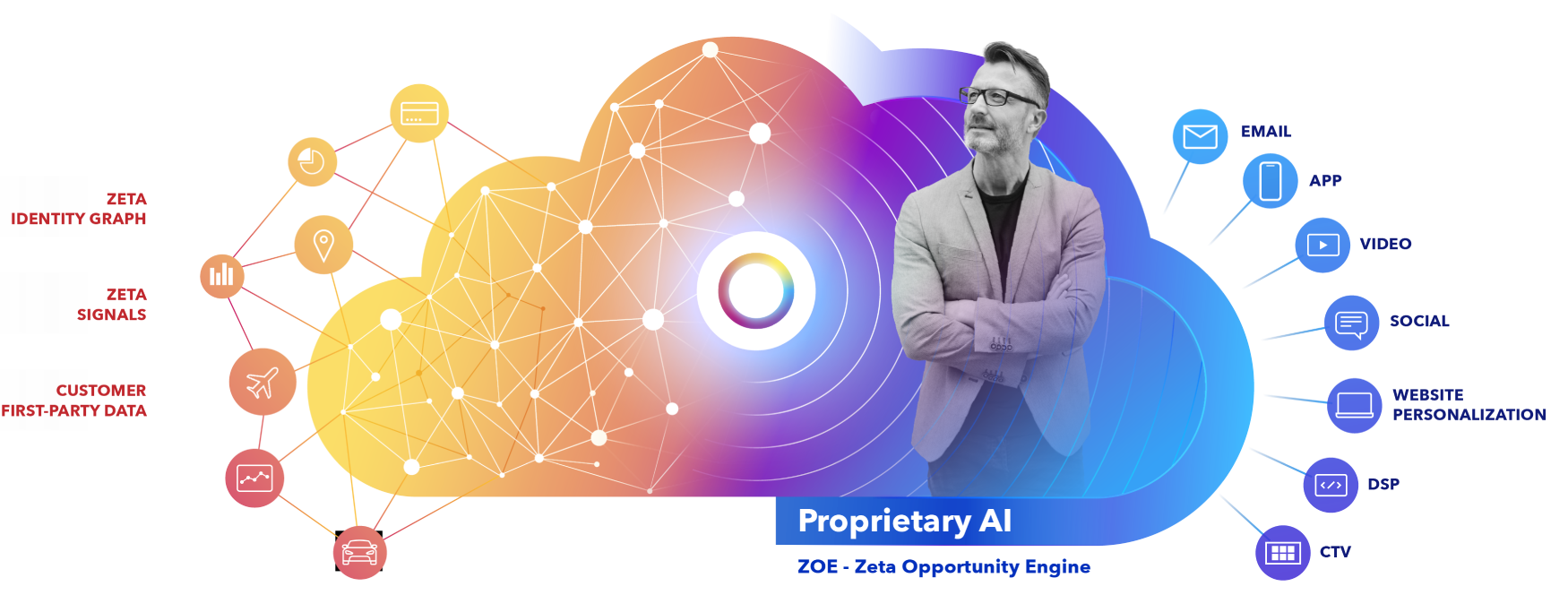
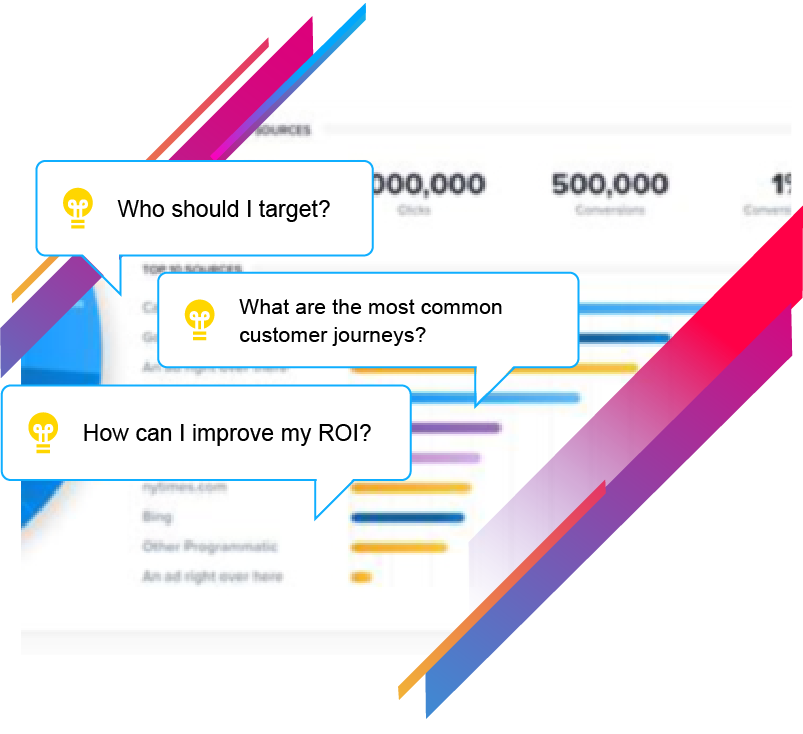
Imagine having your most pressing marketing questions answered by analyzing trillions of proprietary data signals, instantly. ZOE is now available within the Zeta Marketing Platform.
Know and Grow Your Customers from A to Zeta

Designed For Marketers, Built For Results









Power Your Customer Growth
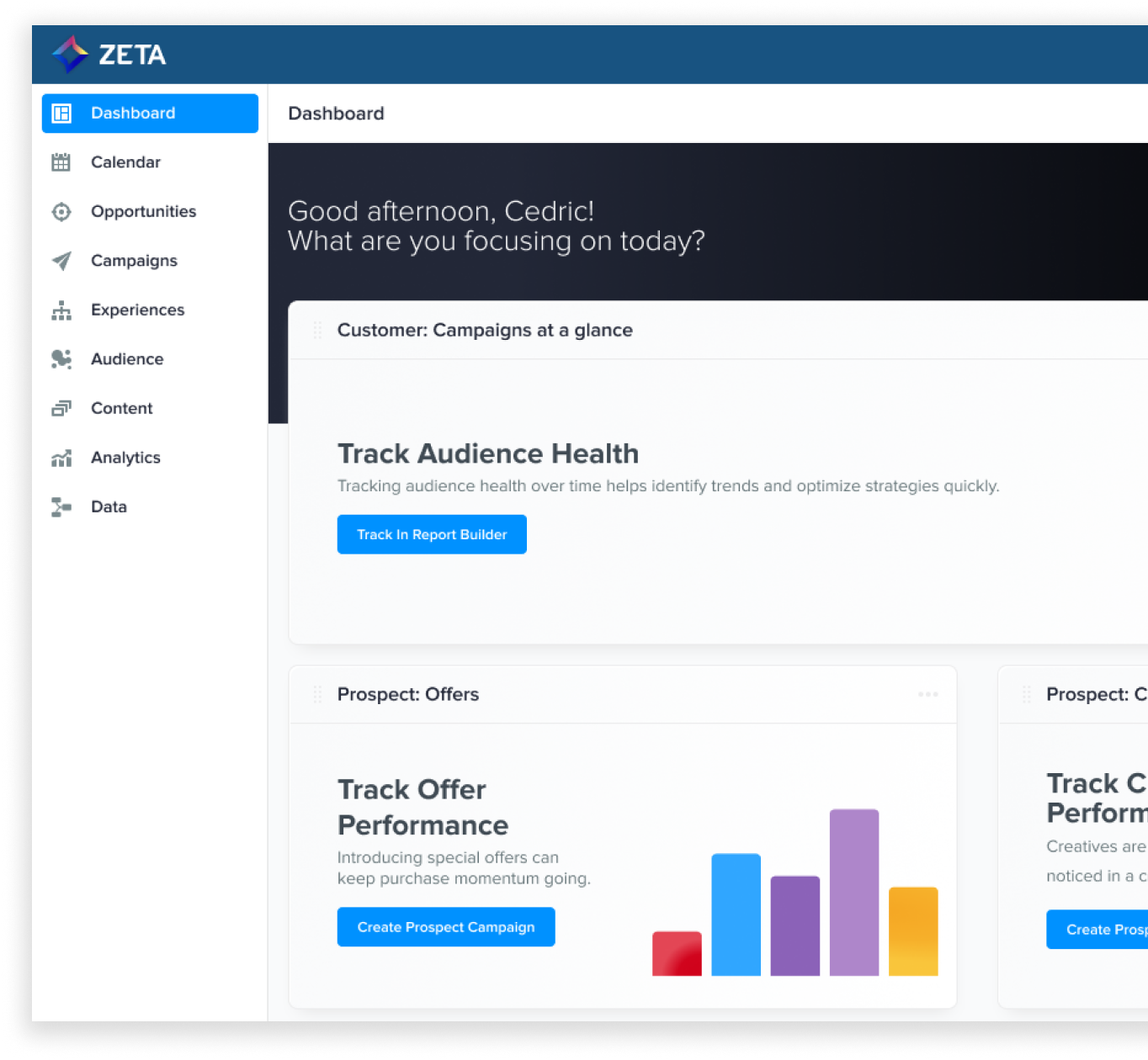
The Zeta Marketing Platform is built to solve your most critical business challenges—such as driving higher marketing ROI, mastering data complexity, and creating omnichannel experiences—always delivering you with better results.

-
 Data Management
Create individualized experiences and drive better results throughout the customer lifecycle
-
 Messaging
Deliver personalized email marketing at scale with one of the industry’s leading email solutions
-
 Activation
Maximize the power of paid media to drive customer acquisition and loyalty at scale
Creating Solutions For:


“

“
“

“